

Scan with a phone camera to open the article. Suitable for posters and notices.
Under the patronage of the Office of the Prime Minister / the National Committee Supporting Community Awareness and Guidance, and under the direct supervision of the President of the University of Shatrah, Prof. Dr. Basim Abdul-Hussein Jarallah, and the Dean of the College of Education for Girls, Prof. Dr. Afrah Abd Al-Maktouf…
The College of Education – University of Shatrah organises an awareness workshop entitled:
(The Psychological and Behavioural Effects of Drug Abuse: A Psychological Study of the Impact of Addiction on the Mind and Behaviour)
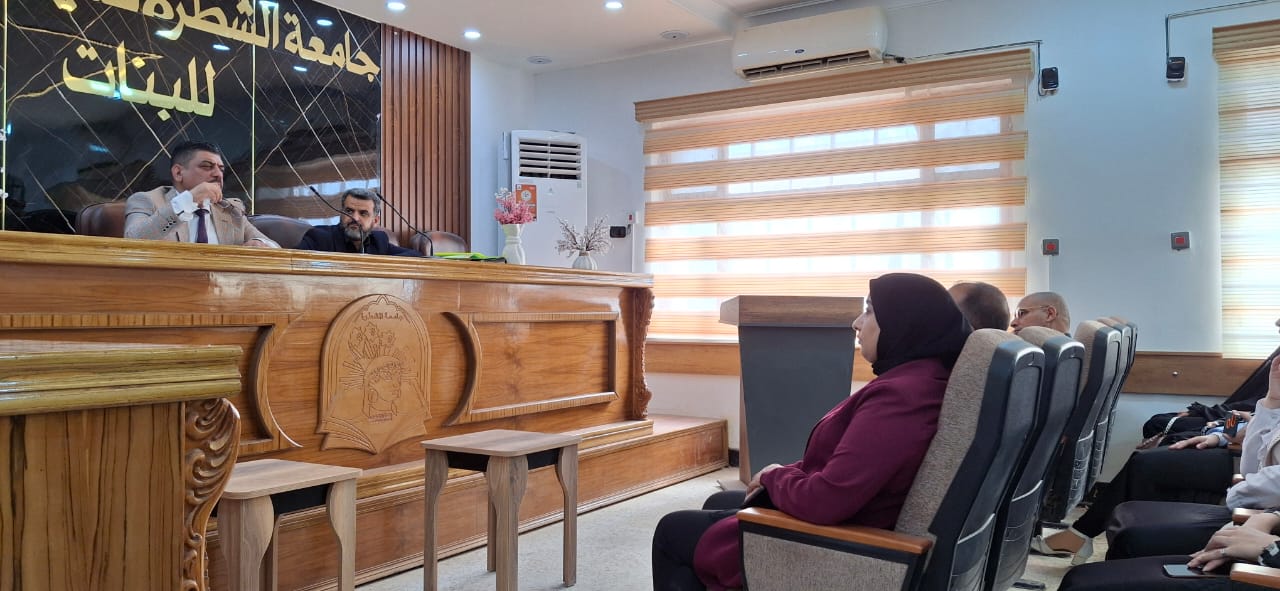
Under the patronage of the President of the University of Shatrah, Prof. Dr. Basim Abdul-Hussein Jarallah, and under the supervision of the Dean of the College of Education for Girls, Prof. Dr. Afrah Abd Maktouf, the Department of Arabic Language at the College of Education organised an awareness workshop entitled "The Psychological and Behavioural Effects of Drug Abuse: A Psychological Study of the Impact of Addiction on the Mind and Behaviour", presented by:
Asst. Prof. Dr. Tayseer Qasim Atiya and Asst. Prof. Dr. Kadhim Khudhair Kadhim of the Department of Arabic Language, in the presence of a number of faculty members and a group of students.
The workshop shed light on the spread of drug abuse as one of the most serious psychological and social challenges of the modern era, owing to its devastating effects on the individual's mental and physical health and decision-making ability, and its negative repercussions on the family and society.
Workshop Themes
First: Introduction and Scope of the Study
The two lecturers reviewed the concept of drugs linguistically and terminologically, explaining that the roots of the word "mukhaddir" (narcotic) are associated with meanings of weakness and lethargy, while the term "idman" (addiction) refers to constant attachment and continuity. The workshop explained that addiction is a psychological and physical condition that compels the individual to use drugs despite knowing their harms, as a result of changes that occur in the brain's reward and control circuits.
Second: The Perspective of Islamic Jurisprudence
The workshop explained that Islamic jurisprudence defines drugs as anything that removes or clouds the mind, affirming their prohibition because of the harms they cause to the objectives of Sharia, particularly the preservation of the mind, in addition to their moral and social effects.
Third: The Psychological, Social, Medical and Legal Perspectives
The two researchers discussed the psychological and behavioural effects of drug abuse, noting that psychologists regard drugs as substances that alter consciousness and behaviour, while sociologists link their spread to economic, family and environmental factors.
From a medical perspective, drugs were divided into a medical type dispensed by prescription and a dangerous type that is criminalised by law. The legal theme also reviewed the penalties applied to users and dealers in order to preserve community security and public health.
Fourth: Drugs in Ancient Arab History
The workshop reviewed the emergence of the use of certain narcotic substances such as hashish and cannabis since ancient times, and their medical and religious uses among the Arabs, the Chinese and the Assyrians, in addition to historical references showing the use of these substances by some ancient poets and figures and the grave consequences some of them suffered, extending even to suicide.
Fifth: Psychological and Behavioural Effects
The workshop addressed a number of serious effects, most notably:
-
Destruction of cognitive abilities.
-
Disturbance of moral and social behaviour.
-
Weak productivity and the breakdown of family relationships.
-
Hallucinations and perceptual disorders resulting from the direct effect on the nervous system.
It was also pointed out that some deviant groups use drugs to influence consciousness and behaviour and to push individuals to adopt extremist or unusual ideas, which makes drugs a cultural and social threat in addition to their health risk.
Conclusion of the Workshop
The workshop witnessed interactive discussions among the attendees on means of prevention and the role of educational institutions in protecting young people from falling into addiction. It concluded with a message of support for those at risk and those in recovery, stressing the importance of psychological and social support on the journey to recovery.
This workshop is part of a series of awareness activities carried out by the Department of Arabic Language within the framework of its community responsibility aimed at building an aware generation capable of facing intellectual and behavioural challenges in society.


